The Science of Indoor Air Quality: What East Tennessee Homeowners Need to Know
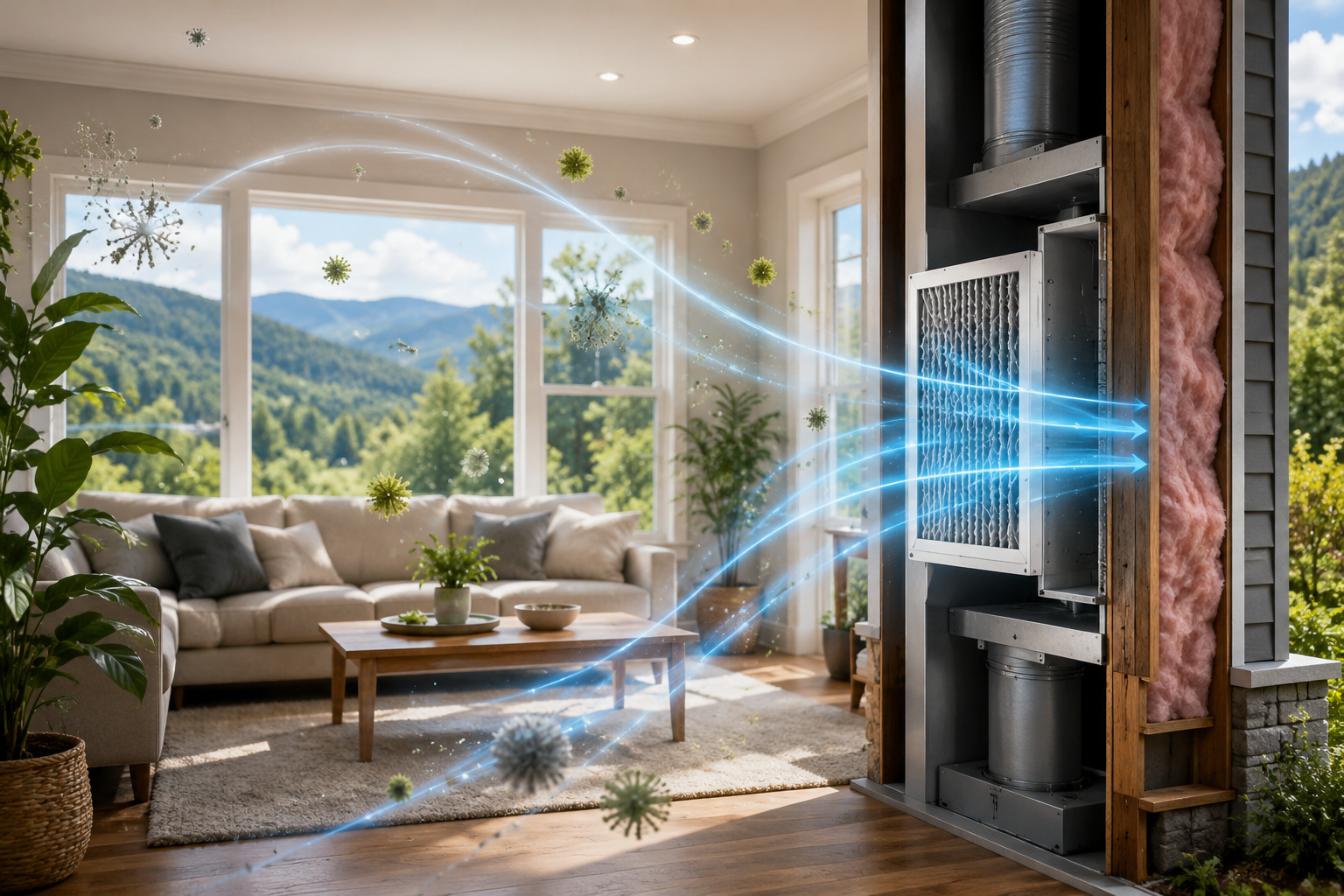
Indoor air quality has emerged as a critical health consideration, particularly in regions with high outdoor humidity and pollen counts. For homeowners in Athens, Sweetwater, and Etowah, understanding the science behind air purification, ventilation, and humidity control enables informed decisions about home environment investments.
The Humidity Challenge
East Tennessee’s average relative humidity exceeds 70% during summer months. Indoor humidity above 60% creates conditions where mold colonies establish within 24-48 hours, dust mite populations explode, and volatile organic compounds (VOCs) off-gas more readily. Conversely, winter humidity below 30% dries mucous membranes, increasing susceptibility to respiratory infections.
Whole-home dehumidification systems integrated with HVAC equipment maintain 40-50% relative humidity year-round. This narrow band minimizes biological growth while preserving respiratory health. Professional assessment determines appropriate dehumidification capacity based on home size, construction quality, and local climate data.
Filtration Technology Advances
Not all filters perform equally. Understanding MERV ratings helps homeowners select appropriate protection:
- MERV 1-4: Basic protection, captures large particles only
- MERV 5-8: Improved filtration, captures mold spores and dust mites
- MERV 9-12: Superior residential filtration, captures lead dust and auto emissions
- MERV 13-16: Hospital-grade filtration, captures bacteria and smoke particles
- HEPA: 99.97% efficiency at 0.3 microns, requires specialized system
Upgrading filtration without assessing system capacity risks airflow restriction and equipment damage. HVAC services in Athens TN providers evaluate existing ductwork and blower capacity before recommending filter upgrades.
Ventilation Strategies
Modern construction creates airtight homes that trap pollutants. Energy recovery ventilators (ERVs) and heat recovery ventilators (HRVs) introduce fresh outdoor air while exhausting stale indoor air, transferring thermal energy between streams to minimize efficiency loss. These systems are particularly valuable in East Tennessee’s climate, where opening windows invites humidity and pollen.
UV-C and Bipolar Ionization
Supplemental technologies target biological contaminants. UV-C lamps installed in ductwork destroy mold, bacteria, and viruses passing through the light field. Bipolar ionization releases charged particles that cluster around contaminants, making them large enough for filtration capture. Both technologies require professional installation and periodic maintenance.
Monitoring and Verification
Consumer-grade air quality monitors measure particulate matter, VOCs, CO2, and humidity. Baseline measurements before system upgrades establish improvement metrics. Post-installation verification confirms that investments deliver promised results.
Conclusion
Indoor air quality science continues evolving, but fundamental principles remain constant: control humidity, filter effectively, ventilate appropriately, and maintain equipment. Working with indoor air quality specialists who understand both technology and local conditions ensures your home supports—not undermines—family health.